When a pipe bursts, a roof leaks, or water infiltrates a bathroom in a Montreal home, the damage often extends far beyond what is visible. Insurance renovation — the process of restoring a property to its pre-damage condition using insurance claim funds — is one of the most misunderstood renovation categories in Quebec. At GRM, we work regularly with Montreal homeowners navigating this process. Here is what you need to know before starting.
What Is Insurance Renovation?
Insurance renovation refers to renovation work that is covered in whole or in part by a homeowner’s insurance policy following an insured event. Common insured events that lead to bathroom renovation claims include:
- Burst or leaking pipes causing water infiltration
- Overflow from a bathtub, shower, or toilet
- Water damage from a unit above in a condo or multi-unit building
- Slow leak behind a wall or under flooring that caused structural damage
- Mold resulting from undetected water infiltration
The insurance company assesses the damage, determines what is covered under the policy, and issues a payment or reimbursement to restore the affected areas. The homeowner then hires a contractor to complete the work.
What Insurance Typically Covers — and What It Doesn’t
Every policy is different, but as a general guideline in Quebec:
Typically covered:
- Demolition of damaged areas
- Drying and moisture remediation
- Structural repairs to walls, floors, and framing
- Replacement of damaged tile, flooring, and fixtures
- Plumbing repairs directly related to the insured event
- Labor and materials to restore the space to its pre-damage condition
Typically not covered:
- Pre-existing deterioration or lack of maintenance
- Upgrades beyond the original scope (if you want to improve while restoring, you pay the difference)
- Cosmetic improvements unrelated to the damage
- Damage caused by gradual leaks the homeowner knew about but didn’t address
One of the most important points: insurance covers restoration to pre-damage condition, not renovation beyond it. If your bathroom was outdated before the damage, insurance will restore it to that outdated condition — not to a new premium finish. If you want to upgrade while the work is being done, that portion is your cost.
The Insurance Renovation Process in Montreal
Step 1 — Report the claim Contact your insurer immediately when damage is discovered. Delays in reporting can affect coverage. Document everything with photos before any cleanup or demolition begins.
Step 2 — Insurance adjuster assessment The insurance company sends an adjuster to assess the damage and determine what is covered. The adjuster produces a scope of work and a dollar amount. Review this carefully — adjusters sometimes underestimate the full extent of damage, particularly hidden moisture damage behind walls.
Step 3 — Hire a contractor You hire your own contractor — the insurance company does not choose your contractor for you. This is important. Choose a contractor you trust, not one the insurer recommends. At GRM, we work directly with your adjuster to ensure the full scope of damage is documented and covered.
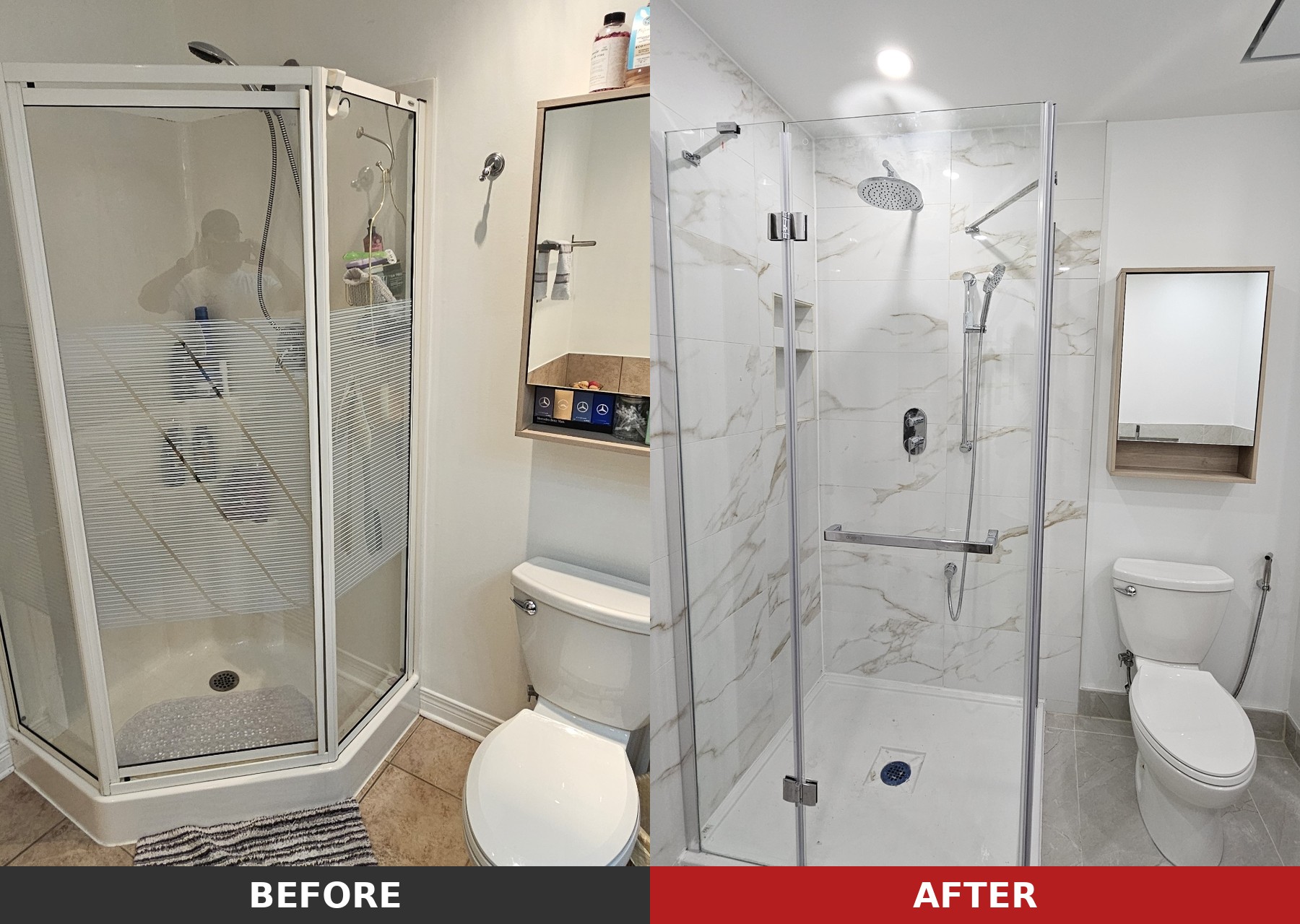
Step 4 — Documentation and permits Renovation work tied to an insurance claim must be documented thoroughly. At GRM, we photograph every stage of the work — demolition, moisture remediation, substrate, waterproofing, and finished result. This documentation protects you if disputes arise with the insurer.
Step 5 — Completion and sign-off Once the work is complete, the insurer may require inspection or sign-off before releasing final payment. Keeping detailed records throughout the project makes this process straightforward.
Why the Contractor You Choose Matters for Insurance Claims
Not all contractors understand the insurance renovation process. Common problems with inexperienced contractors on insurance jobs:
- Underestimating scope — Starting demolition and discovering additional hidden damage that wasn’t in the original estimate. An experienced contractor anticipates this and documents it properly for the insurer.
- Missing waterproofing — Insurance restoration that doesn’t include proper waterproofing will fail again. We see this regularly. The insurer paid for restoration, but the contractor cut corners on waterproofing, and the problem returns within a few years.
- Poor documentation — If your contractor doesn’t document the work properly, disputes with the insurer are harder to resolve.
- Not RBQ licensed — In Quebec, all renovation contractors must hold a valid RBQ license. An unlicensed contractor creates liability issues with your insurer.
At GRM, we are RBQ licensed, carry full liability insurance, and document every insurance renovation project with photos at every stage. We communicate directly with adjusters when additional scope needs to be approved.
Water Damage Behind Bathroom Walls — What We Find
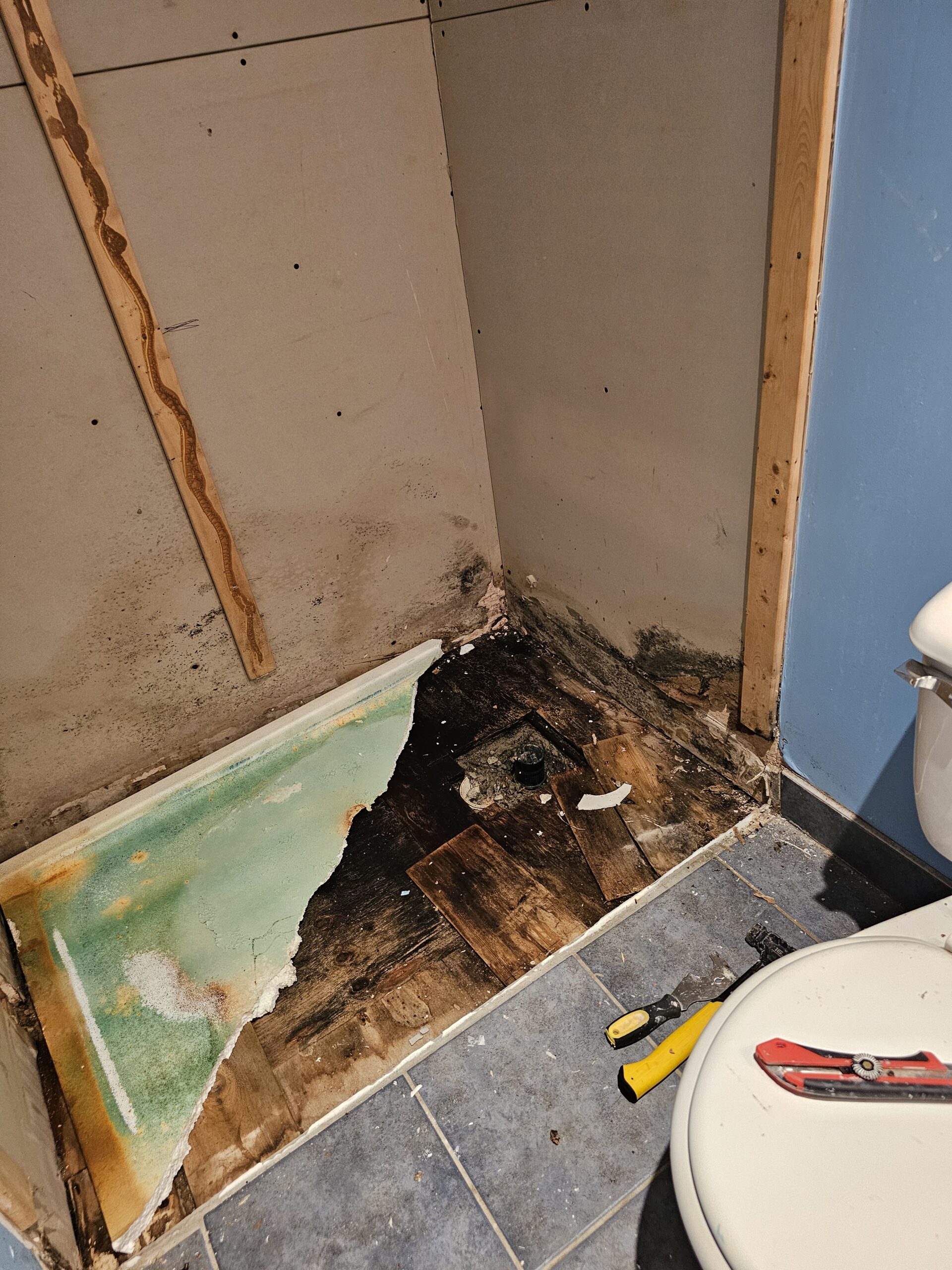
The most common insurance renovation we handle in Montreal involves water damage behind bathroom tile. In most cases, the visible damage — a stained ceiling in the unit below, soft flooring near the shower — represents only a fraction of the actual damage.
When we demolish, we regularly find:
- Black mold on wall framing behind the original tile
- Rotted wood substrate that was never waterproofed correctly
- Corroded or cracked plumbing that was the original source of the leak
- Damaged floor joists in severe cases
All of this must be documented and submitted to the insurer before proceeding. Skipping this step or proceeding without approval can result in the insurer refusing to cover the additional scope.
Upgrading During an Insurance Renovation
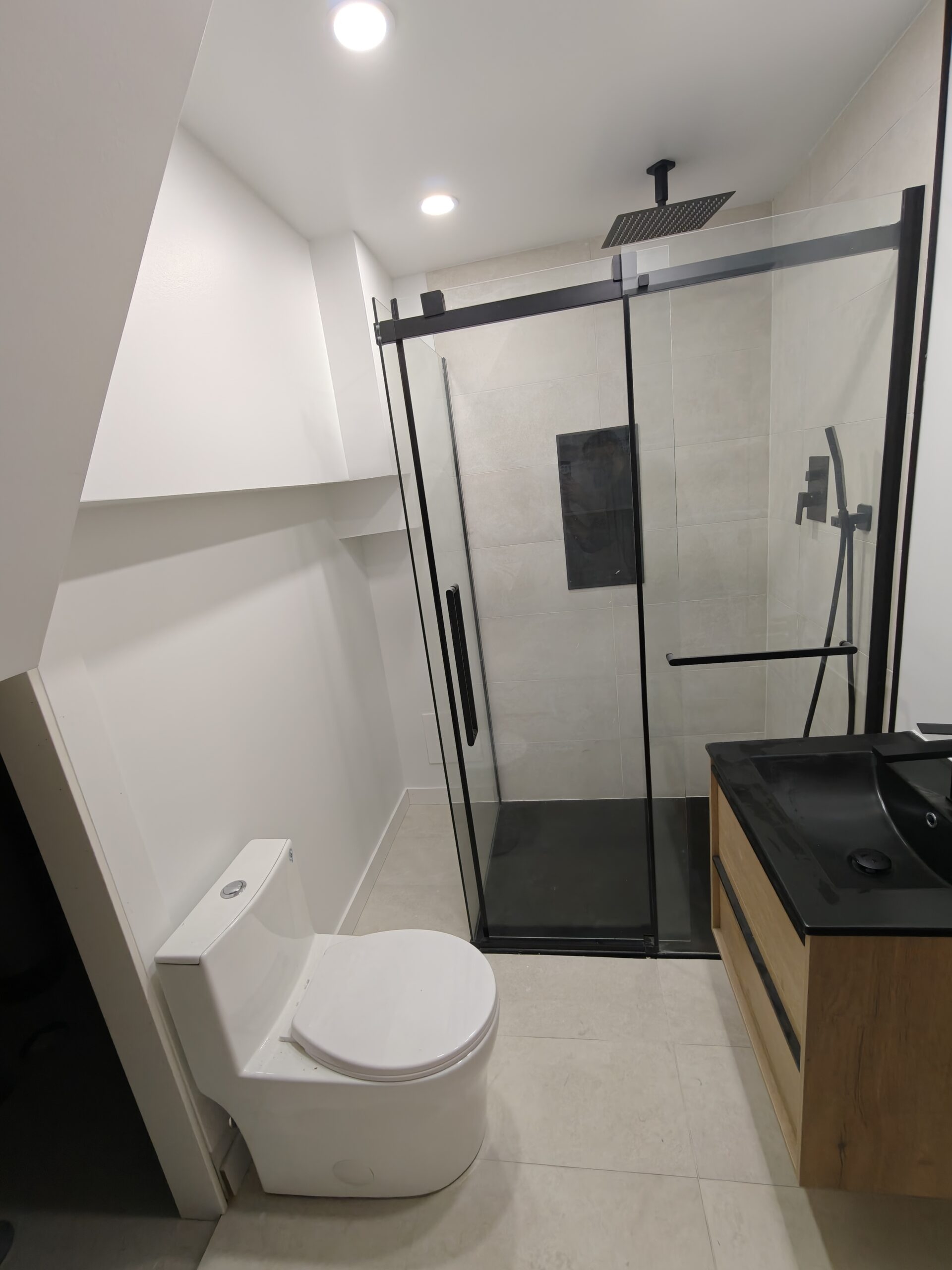
Many homeowners choose to upgrade their bathroom while insurance work is being done. This is a practical approach — the space is already being demolished and restored, so the incremental cost of upgrading is lower than it would be for a standalone renovation.
The process is straightforward:
- Insurance covers the restoration to pre-damage condition
- You pay the difference for any upgrades beyond that scope
- GRM provides a clear breakdown of what is covered vs. what is your responsibility
Common upgrades clients add during insurance renovations: heated floors, a walk-in shower replacing an old tub, large format tile replacing small mosaic, upgraded vanity and fixtures.
Frequently Asked Questions
Does my insurance cover mold remediation? In most cases, yes — if the mold resulted from an insured event such as a burst pipe or overflow. Mold resulting from long-term neglect or lack of maintenance is typically not covered. GRM documents mold findings during demolition and submits them to the insurer for approval before remediation begins.
Can I choose my own contractor for an insurance renovation in Montreal? Yes. You have the right to choose your own contractor. The insurance company may suggest preferred contractors, but you are not obligated to use them. Choose a contractor based on quality, licensing, and experience with insurance claims.
How long does an insurance bathroom renovation take in Montreal? Timeline depends on scope and insurance approval speed. A typical bathroom insurance renovation at GRM takes 10 to 20 working days from demolition to completion. Insurance approval for additional scope items can add 3 to 7 business days.
What documentation should I keep throughout the process? Keep copies of your claim number, adjuster reports, all written estimates, all change orders, photos of damage before and after demolition, and the final invoice. GRM provides a complete project file to all clients upon completion.
Dealing with water damage or an insurance claim in Montreal? Contact Groupe Rénovation Montréal for a free assessment. We are RBQ licensed, fully insured, and experienced with insurance renovation claims across Montreal, Laval, and the West Island.