Bathroom waterproofing is one of the most critical steps in any shower or bathroom renovation — and one of the most frequently skipped or done incorrectly by contractors in Montreal. The result is almost always the same: water infiltrates behind the tile, damages the substrate, and eventually causes mold, structural rot, or leaks into the floor below.
At GRM, waterproofing is never optional. Here is what every Montreal homeowner should know before starting a bathroom renovation.
Why Shower Leaks Happen
Most shower leaks are not caused by grout cracks or tile damage. They are caused by what is behind the tile — specifically, a failed or missing waterproofing membrane.
When water penetrates grout joints — and it always does over time — it reaches the substrate underneath. If that substrate is not properly waterproofed, water accumulates, freezes in winter, and begins to break down the structure from the inside. In Montreal’s climate, freeze-thaw cycles accelerate this process significantly compared to warmer cities.
The three most common causes of shower leaks we find in Montreal bathrooms:
1. No membrane, only cement board Cement board is water-resistant, not waterproof. Many contractors treat it as a waterproofing layer. It is not. Water passes through cement board and into the wall framing behind it.
2. Liquid membrane applied too thin Liquid waterproofing membranes require a minimum thickness to be effective. When applied in a single thin coat to save time, they crack under movement and lose their waterproofing properties within a few years.
3. Uncovered joints and corners The corners where walls meet the floor, and where the shower pan meets the walls, are the highest-risk points for water infiltration. Without fabric reinforcement tape embedded in the membrane at every joint, these areas will eventually fail.
The Schluter System: What We Use and Why
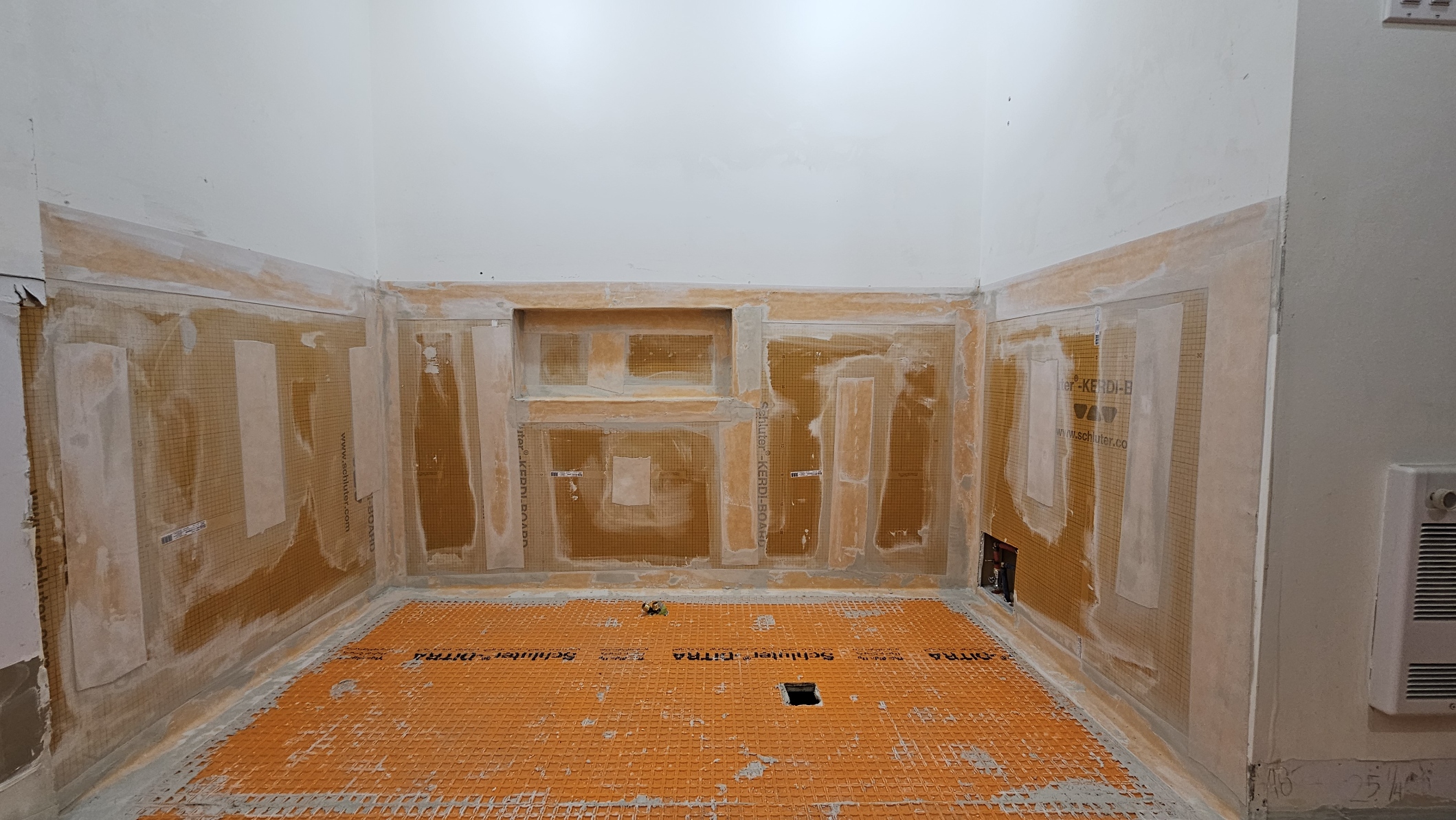
At GRM, we use the Schluter KERDI waterproofing system on all our shower installations. KERDI is a bonded waterproof membrane that is applied directly to the substrate and covered with tile adhesive, creating a continuous watertight layer behind every surface.
What separates KERDI from standard liquid membranes:
- It is a bonded sheet membrane, not a painted-on coating — it cannot crack or peel
- It requires no drying time between coats
- It integrates directly with Schluter drain systems, eliminating the most vulnerable point in any shower: the drain connection
- It is tested and certified for use under ceramic, porcelain, and natural stone tile
In a Montreal bathroom, where temperature and humidity fluctuate year-round, a bonded membrane system performs significantly better than liquid alternatives over a 10 to 15-year period.
GoBoard: A Faster Alternative to Traditional Waterproofing
One product that’s becoming increasingly popular on Montreal bathroom renovations is GoBoard by Johns Manville — a rigid tile backer board that is 100% waterproof right out of the box.
Unlike traditional cement board, which is water-resistant but not waterproof, GoBoard is made from a closed-cell polyisocyanurate foam core with fibreglass-reinforced facers. Water simply cannot penetrate it.
Why Contractors Are Using GoBoard
- Lightweight — up to 5x lighter than cement board, making it easier to handle and cut on the job site
- Fully waterproof — no separate membrane required on walls; the board itself is the waterproofing layer
- Faster installation — fewer steps means less labour time, which can reduce overall project cost
- Excellent tile adhesion — tiles bond directly to the surface without issues
- Mold and moisture resistant — ideal for Montreal bathrooms where humidity is a year-round concern
Where GoBoard Works Best
GoBoard is primarily used on shower walls and tub surrounds. For shower floors and wet area floors, a proper sloped mortar bed or foam shower pan with membrane is still required. Used correctly, GoBoard combined with a quality floor waterproofing system creates one of the most reliable moisture barriers available for residential bathrooms.
GoBoard vs. Schluter Kerdi
Both are excellent systems, but they work differently:
| GoBoard | Schluter Kerdi | |
|---|---|---|
| Type | Rigid backer board | Fabric membrane over cement board |
| Waterproofing | Built into the board | Applied as a separate layer |
| Best for | Walls | Walls + floors + transitions |
| Installation speed | Faster on walls | More versatile overall |
At GRM, we select the waterproofing system based on the specific project — GoBoard for straightforward wall applications, and Schluter KERDI or DITRA where more complex transitions and floor waterproofing are needed.
How to Know If Your Current Shower Is Leaking
Many shower leaks are invisible for months or years before they cause visible damage. Signs to watch for:
- Soft or spongy floor tiles near the shower threshold
- Grout that discolors or crumbles faster than expected
- Paint bubbling or peeling on walls adjacent to the shower
- A persistent musty smell in the bathroom even after cleaning
- Water stains on the ceiling of the room below the bathroom
If you notice any of these signs in a Montreal home, especially in buildings from the 1960s to 1990s where original waterproofing was minimal or non-existent, we recommend an inspection before the problem reaches the structure.
What Proper Waterproofing Looks Like
A properly waterproofed shower in 2025 should include:
- Full membrane coverage on all shower walls, floor, and the first 6 inches of surrounding floor area
- Fabric reinforcement tape embedded in wet membrane at every inside corner and joint
- Integrated drain system that connects the membrane directly to the drain body — no gap between membrane and drain
- Minimum two coats of liquid membrane or a single bonded sheet membrane
- Inspection before tile installation — waterproofing should be verified before any tile goes up
At GRM, we document every waterproofing installation with photos before tile is installed. This protects the client and provides a record of what was done behind the finished surface.
The Cost of Skipping Waterproofing
We regularly receive calls from Montreal homeowners who had a bathroom renovated 3 to 7 years ago and are now dealing with water damage behind the tile. In most cases, the repair requires:
- Full tile demolition
- Substrate replacement
- Mold remediation in some cases
- Complete re-installation
The cost of fixing a failed waterproofing job typically exceeds the cost of the original renovation. Proper waterproofing during the renovation costs a fraction of that.
Frequently Asked Questions
Do I need a permit for bathroom waterproofing in Montreal? Waterproofing itself does not require a permit in Montreal. However, if your renovation involves moving plumbing, adding electrical outlets, or making structural changes, permits may be required. GRM handles all permit requirements for projects where they apply.
How long does waterproofing take to complete? In a typical GRM bathroom renovation, waterproofing takes one full day. Liquid membranes require 24 hours of curing time before tile installation can begin. Schluter KERDI can be tiled immediately after installation, which reduces the overall timeline.
Can waterproofing be added to an existing shower without full demolition? In most cases, no. Effective waterproofing requires access to the substrate behind the tile. Adding a surface coating over existing tile is not a long-term waterproofing solution. If your shower is leaking, the tile needs to come down.
Planning a bathroom renovation in Montreal? Contact Groupe Rénovation Montréal for a free on-site estimate. We serve Montreal, Laval, West Island, and surrounding areas.