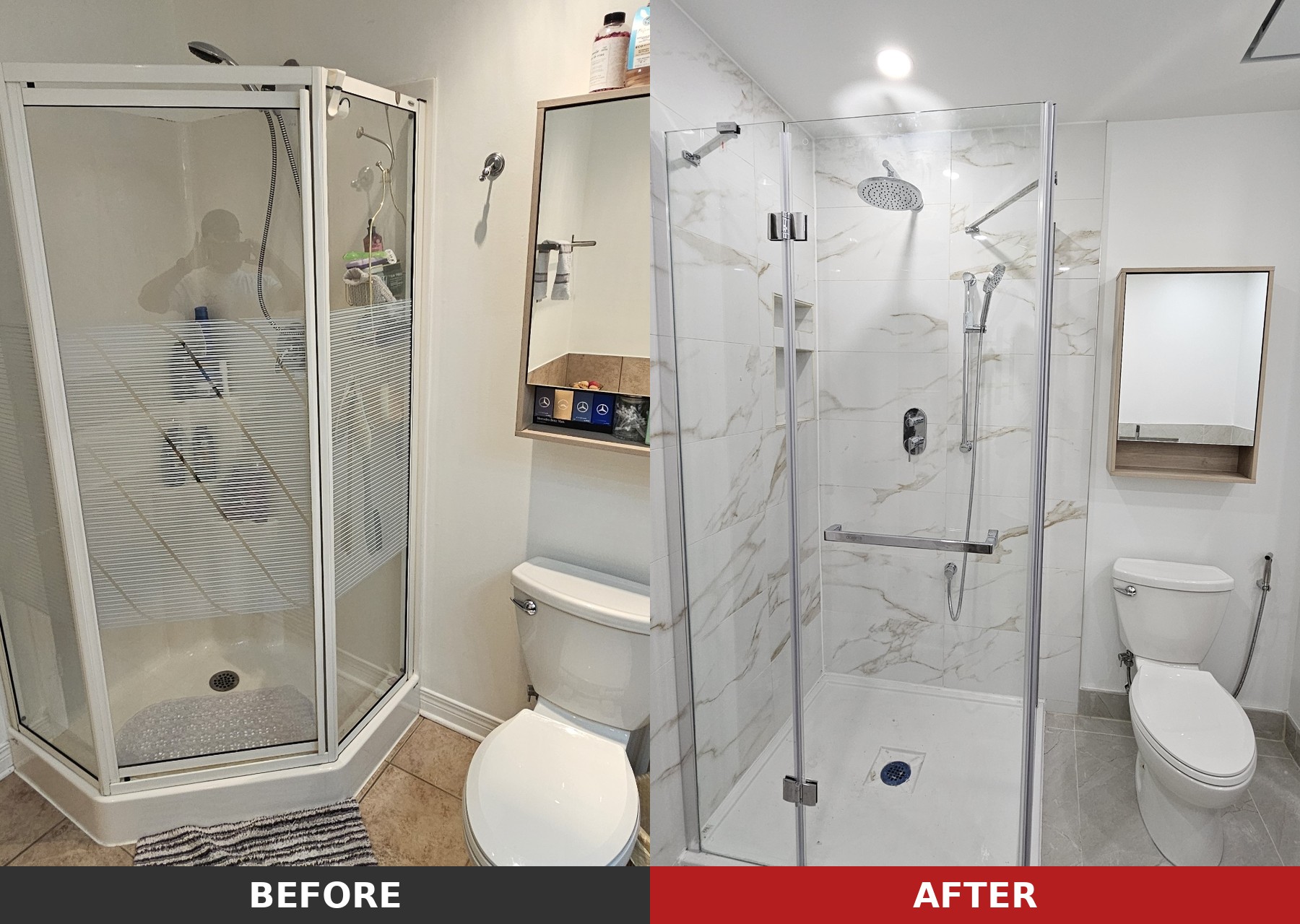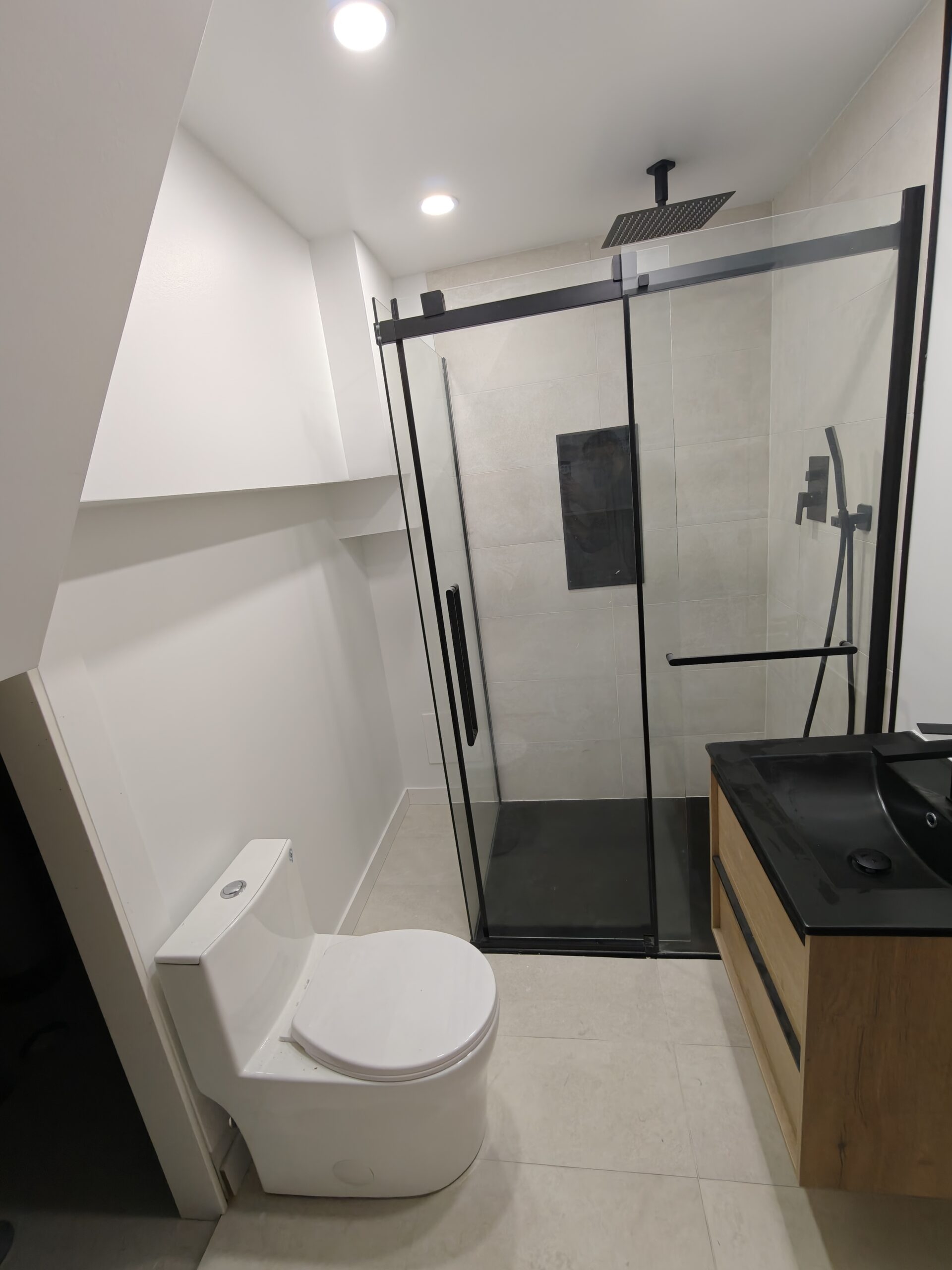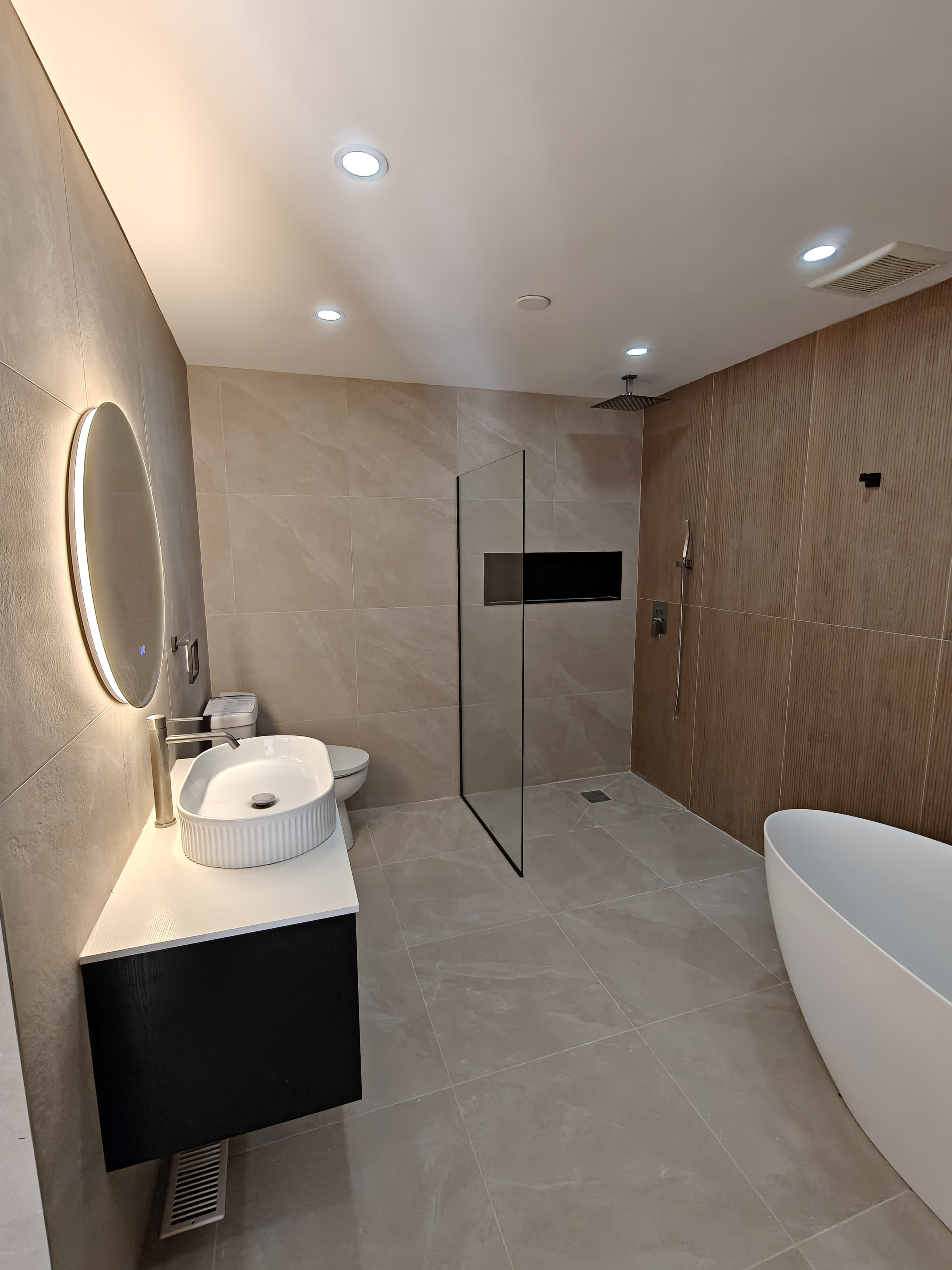
Converting a bathtub to a walk-in shower is one of the most requested bathroom renovations in Montreal. Homeowners do it for practical reasons — easier access, better use of space, a more modern look — and it consistently adds value to a property when done correctly.
At GRM, we complete bathtub to walk-in shower conversions regularly across Montreal, Laval, and the West Island. Here is everything you need to know before starting this project.
Why Montreal Homeowners Convert Bathtubs to Walk-In Showers
The most common reasons we hear from clients:
- Aging in place — a curbless walk-in shower is significantly safer than stepping over a tub edge, particularly for homeowners over 55
- Space efficiency — in smaller Montreal condos and apartments, a well-designed walk-in shower feels larger and more open than a tub-shower combination
- Resale value — in most Montreal properties, a modern walk-in shower is more appealing to buyers than an old tub, particularly in the primary bathroom
- Daily usability — most adults shower daily and use the bathtub rarely. Converting recovers space that is otherwise wasted
One exception: if you have children or if the bathroom being converted is the only bathtub in the home, keep the tub. Buyers with young families expect at least one bathtub in the property.
What the Conversion Actually Involves
A bathtub to walk-in shower conversion is not a simple swap. It involves several trades and requires careful sequencing.
1. Demolition The existing bathtub, surround tiles, and any damaged drywall or substrate are removed. This is when hidden problems are discovered — water damage behind the tub surround, mold in the framing, outdated plumbing. In Montreal’s older housing stock, particularly triplexes and duplexes built before 1980, finding moisture damage behind the original tub is common.
2. Plumbing modifications The drain location for a walk-in shower is typically different from a bathtub drain. The plumber relocates the drain, adjusts the water supply lines, and repositions the valve and showerhead rough-in. If you are adding a rain shower head or a body spray system, this is planned at this stage.
3. Waterproofing This is the most critical step and the one most often done incorrectly by cheaper contractors. The entire shower area — walls, floor, and all corners — must be waterproofed with a bonded membrane system before any tile is installed. At GRM, we use Schluter KERDI on walls and Schluter DITRA or KERDI on the floor, with an integrated drain system that connects the membrane directly to the drain body.
A walk-in shower without proper waterproofing will leak within 3 to 7 years. The repair cost typically exceeds the original renovation cost.
4. Tile installation Once the waterproofing is complete and inspected, tile installation begins. Floor tile for a walk-in shower requires a slight slope toward the drain — typically 1/4 inch per foot — to ensure proper drainage. This slope must be built into the substrate, not assumed from the tile installation alone.
5. Glass enclosure or open design Depending on the bathroom layout, the shower may have a frameless glass door, a semi-frameless enclosure, or an open wet room design. Each option affects the waterproofing scope and the overall project cost.
6. Finishing Niches, benches, grab bars, linear drains, and lighting are installed. Final plumbing connections are made and the shower is tested before the client takes possession.
How Long Does a Bathtub to Shower Conversion Take?
A typical GRM bathtub to walk-in shower conversion takes 10 to 16 working days from demolition to completion, depending on the scope.
The timeline breakdown:
- Demolition and plumbing: 1–2 days
- Substrate and waterproofing: 1–2 days
- Waterproofing cure time: 24 hours minimum
- Tile installation: 2–4 days depending on size and tile format
- Grouting and curing: 2 days
- Glass enclosure installation: 1 day
- Final plumbing and finishing: 1 day
Custom elements — large format tiles, heated floors, linear drains, custom glass — add time.
What Does a Bathtub to Walk-In Shower Conversion Cost in Montreal?
The investment varies significantly based on size, materials, and scope. As a general reference:
Standard conversion — existing tub footprint, standard tile, basic glass door, updated plumbing: projects in this range are typically mid-five figures depending on finishes and site conditions.
Premium conversion — larger footprint, large format porcelain, frameless glass, rain shower, niche, bench, heated floor: projects at this level are priced accordingly based on scope.
We provide written estimates after an on-site assessment. We do not provide accurate pricing over the phone or by photos because every Montreal bathroom is different — the age of the building, the current plumbing configuration, and what we find behind the walls all affect the final scope.
Curbless vs. Curbed Shower — Which Is Right for You?
Curbless (zero-threshold): No lip at the shower entrance. Water is contained by the floor slope and sometimes a linear drain at the entry. Requires more precise waterproofing and a longer slope run. Ideal for accessibility and for open wet room designs. More complex to build correctly.
Curbed: A small raised threshold at the shower entrance. Easier to waterproof and build. More forgiving in smaller spaces. Still the standard in most Montreal bathroom renovations.
Both options are available. The choice depends on the bathroom layout, the floor structure, and your personal preference.
What to Look for When Hiring a Contractor for This Work
Questions to ask any contractor before signing:
- What waterproofing system do you use? If the answer is “cement board” or “RedGard painted on once,” look elsewhere.
- Do you handle the plumbing or subcontract it? Coordination between trades matters. At GRM, we manage the full project.
- Can I see photos of completed walk-in shower conversions you have done? Any contractor who does this regularly will have a portfolio.
- What warranty do you offer on the work? GRM offers a 10-year workmanship warranty on all bathroom renovations.
- Are you RBQ licensed? In Quebec, renovation contractors must hold a valid RBQ license. Verify the license number on the RBQ website before signing any contract.
Frequently Asked Questions
Do I need a permit to convert a bathtub to a walk-in shower in Montreal? If the conversion involves moving plumbing within the existing bathroom footprint, a permit is typically not required in Montreal. If structural changes are involved or if the project affects shared plumbing in a multi-unit building, permits may be required. GRM advises clients on permit requirements during the estimate.
Can the conversion be done in one bathroom while I still use the rest of the house? Yes. Most clients remain in their home during the renovation. We establish a clear daily schedule, protect adjacent areas, and clean the work area each day before leaving.
What happens if you find mold or water damage behind the old tub? We document it, show the client, and provide a revised scope and cost estimate before proceeding. We do not hide problems or proceed without client approval. In Montreal’s older buildings, finding some moisture damage behind original tub surrounds is not uncommon — it is part of why a proper renovation matters.
Planning a bathtub to walk-in shower conversion in Montreal? Contact Groupe Rénovation Montréal for a free on-site estimate. We serve Montreal, Laval, West Island, and surrounding areas.